
• Female dogs go through an estrous cycle every 6–12 months, with light bleeding in the first phase (proestrus) – this is not the same as human menstruation.
• Signs include swollen vulva, bloody discharge, increased urination, and changes in behaviour; the fertile phase is diestrus, not when bleeding is visible.
• Spaying before the first heat dramatically reduces the risk of mammary tumours and pyometra – ask your Vetic vet about spaying options.
Dogs experience a reproductive cycle similar to a human menstrual cycle, but there are significant differences. While female dogs do bleed during part of their reproductive cycle, this process is known as “estrus” or being “in heat,” not menstruation. The bleeding you observe is a sign that your dog is entering the fertile phase of her cycle.
“In dogs, the estrous cycle is hormonally driven and consists of stages preparing the uterus for pregnancy. Unlike humans, dogs absorb the endometrial lining if pregnancy does not occur, rather than shedding it.” — Dr. Abhishek Choudhary, BVSc & AH.
Is Heat in Dogs the Same as Periods or Menstruation?
No. In humans, menstruation involves the shedding of the uterine lining when pregnancy does not occur. In dogs, the heat cycle is part of the estrous cycle, and it includes hormonal and physical changes that prepare the body for potential pregnancy.
Dogs do not shed their uterine lining in the same way humans do; instead, the blood discharge is due to changes in hormone levels and increased blood flow to the reproductive organs.
How Long Does Dog Menstruation Last? How Long Does Bleeding Last in Dogs in Heat?
The bleeding phase of the canine estrous cycle (proestrus) typically lasts around 7 to 10 days. However, the entire heat cycle spans about 2 to 4 weeks and includes four distinct stages. Each dog is different, and the cycle can vary in duration and intensity.
A study published in Theriogenology confirms that the full estrous cycle in dogs averages around 180 days, with estrus typically lasting 5–14 days (Concannon et al., 2011).
Visible bleeding in dogs on heat typically occurs during the proestrus phase and lasts 7 to 10 days. In the following estrus phase, bleeding lightens or stops but the dog is at her most fertile. Total observable discharge can last 12 to 21 days. Bleeding that extends beyond 21 days or appears unusually heavy is worth discussing with your vet.
What are the Signs of Heat in Dogs?

- Swollen vulva
- Bloody or straw-colored vaginal discharge
- Increased urination
- Mounting or humping behavior
- Nervousness, agitation, or clinginess
- Tail flagging (moving tail to the side)
- Attention from male dogs
As per the World Small Animal Veterinary Association (WSAVA), behavioral changes, along with vulvar swelling and discharge, are primary signs of proestrus (WSAVA Global Guidelines).
What Does a Dog in Heat Look Like?
Physical signs to watch for include a noticeably swollen vulva, which can be two to three times its normal size, bloody or straw-coloured vaginal discharge, frequent licking of the genital area, and a tucked tail when near male dogs. These physical changes often appear before obvious behavioural changes and are the most reliable early indicator that a dog has entered heat.
What are the Phases of a Heat Cycle in Dogs? (Canine Estrous Cycle)

According to the American Veterinary Medical Association (AVMA), the estrous cycle in dogs consists of four stages, with visible bleeding only during the proestrus stage (AVMA Spay/Neuter FAQ).
- Proestrus: 7–10 days
- First signs of heat
- Swollen vulva
- Bloody vaginal discharge
- Male dogs are attracted, but the female will not mate
- Estrus: 5–14 days
- Fertile phase
- Discharge becomes pinkish or straw-colored
- Female is receptive to mating
- Diestrus: 60–90 days
- Pregnancy occurs if mating was successful
- If not pregnant, hormone levels gradually return to normal
- Anestrus: 4–6 months
- Reproductive system rests
- No visible signs of sexual behavior
When Do Female Dogs First Get Their Period?
Most female dogs experience their first heat cycle between 6 and 12 months of age. Smaller breeds may begin as early as 4 months, while larger breeds might start closer to 18–24 months.
This first heat indicates sexual maturity but not necessarily emotional or physical readiness for breeding.
Do Male Dogs Go Into Heat?
Male dogs do not experience a heat cycle or period. Only female dogs go through heat. However, intact male dogs can detect a female in heat from a significant distance through pheromones and will show restlessness, persistent interest, and marking behaviour. Some male dogs may also react to hormonal changes in their human owners, though the scientific evidence for this is limited. If mating-driven behaviour in your male dog is causing concern, speak to your vet about neutering.
When Will My Dog Go Into Heat?

After the first cycle, dogs typically go into heat every 6 months. However, this can vary by breed and individual dog. Smaller dogs may have more frequent cycles, while large or giant breeds might go into heat just once a year.
How Often Will Your Dog Get Their Period or Go Into Heat?
On average, a female dog will experience two heat cycles per year. Irregularities may occur in the first few cycles but usually stabilize over time. Keep a calendar to track your dog’s cycles, especially if you are not planning to spay her.
What is the Estrus Cycle in Dogs? Is it Different from Heat in Dogs?
“Estrus” is one of the four stages of the estrous cycle. When people say a dog is “in heat,” they usually mean she is in either the proestrus or estrus phase. So while “heat” and “estrus cycle” are often used interchangeably, the estrous cycle encompasses all four phases, not just the fertile period.
Will My Dog Become Pregnant During Heat?

Most likely. If a female dog mates with an intact male during the estrus phase, there is a high likelihood of pregnancy. You can find out the signs of pregancy right here; for early-stage confirmation, your dog will require an ultrasound. Ovulation typically occurs during estrus, making it the most fertile stage. Pregnancy prevention (via spaying or controlled mating) is critical if you’re not planning to breed your dog.
How Long Does Dog Pregnancy Last? (Dog Gestation Period in Months)
A dog’s gestation period typically lasts 58–68 days, with an average of 63 days (roughly 2 months). This can vary depending on breed, age, and individual health.
“The average canine pregnancy lasts about 63 days from ovulation. But timing is critical – fertilization and implantation vary, which can affect how pregnancy is confirmed and managed.” — Dr. Abhishek Choudhary
How Can I Comfort My Dog During Her Heat?

- Provide a quiet and safe space: Dogs can feel vulnerable during heat, so ensure a comfortable resting area.
- Offer calming products: Pheromone diffusers or anxiety-reducing toys may help.
- Maintain hygiene: Use dog diapers to manage discharge and keep her clean.
- Routine walks: Keep her on a leash and avoid male dogs.
- Extra affection: Gentle petting and company can ease discomfort.
Does It Hurt for Dogs to Have Their Period? Do They Also Get Period Cramps?
Dogs do not experience menstruation as humans do, and there is limited scientific evidence that they suffer cramps. However, some dogs may exhibit signs of mild discomfort or irritability during heat. If your dog seems in pain, stops eating or vomits, consult a veterinarian to rule out other causes.
Do Dogs Require Medication During Their Period or Heat?
Generally, no medication is required during a normal heat cycle. However, dogs with false pregnancy (pseudopregnancy) may display signs such as nesting, mammary enlargement, or even lactation. In such cases, hormonal treatment may be necessary under veterinary guidance.
According to the British Small Animal Veterinary Association (BSAVA), pseudopregnancy is common in unspayed dogs and can be managed with hormone therapy if symptoms persist (BSAVA Manual of Canine and Feline Reproduction and Neonatology).
Can You Spay a Dog During Heat?
Technically, yes, but it’s not ideal. Spaying during heat carries increased risk of bleeding and surgical complications due to engorged blood vessels. Most vets recommend waiting until the heat cycle is over, or doing the procedure before the dog ever goes into heat.
Should I Let My Dog Have Her First Heat Before Spaying?

Veterinarians often recommend spaying before the first heat (around 6 months) to reduce the risk of mammary tumors and uterine infections (pyometra). However, large breed dogs might benefit from a delay in spaying for proper growth and joint health. Always consult your vet for breed-specific advice.
“Spaying is safest before the first heat. It reduces the risk of mammary tumors by nearly 90%. However, timing should consider the dog’s breed, age, and overall health.” — Dr. Abhishek Choudhary
Do All Dogs Bleed During Heat?
Most dogs have some amount of bleeding during proestrus, but it can vary. Some dogs have very light bleeding that’s hard to detect. Others may bleed heavily. Clean floors, use diapers if necessary, and track signs carefully.
Can Dogs Have Heat Without Bleeding?
It’s rare but possible. This is called a “silent heat,” where hormonal changes occur but external signs like bleeding are minimal. A vet can confirm heat via hormonal tests or vaginal cytology.
Do Dogs Get Mood Swings During Heat?

Yes. Hormonal fluctuations can cause changes in mood, such as clinginess, irritability, or anxiety. These behaviors are normal but should be monitored. If they persist, consult a vet.
Do Male Dogs Go Into Heat?
No. Only female dogs go through heat cycles. However, intact males can smell females in heat from far away and may become agitated, restless, or attempt to escape to find a mate.
Is My Male Dog Affected by My Period?
Some dogs may detect hormonal changes in their owners due to their heightened sense of smell. However, there is no scientific evidence that a female owner’s menstrual cycle significantly changes a male dog’s behaviour. If you notice unusual behaviour, other factors such as anxiety or diet changes are more likely the cause.
Can My Dog Go for Walks During Her Heat?
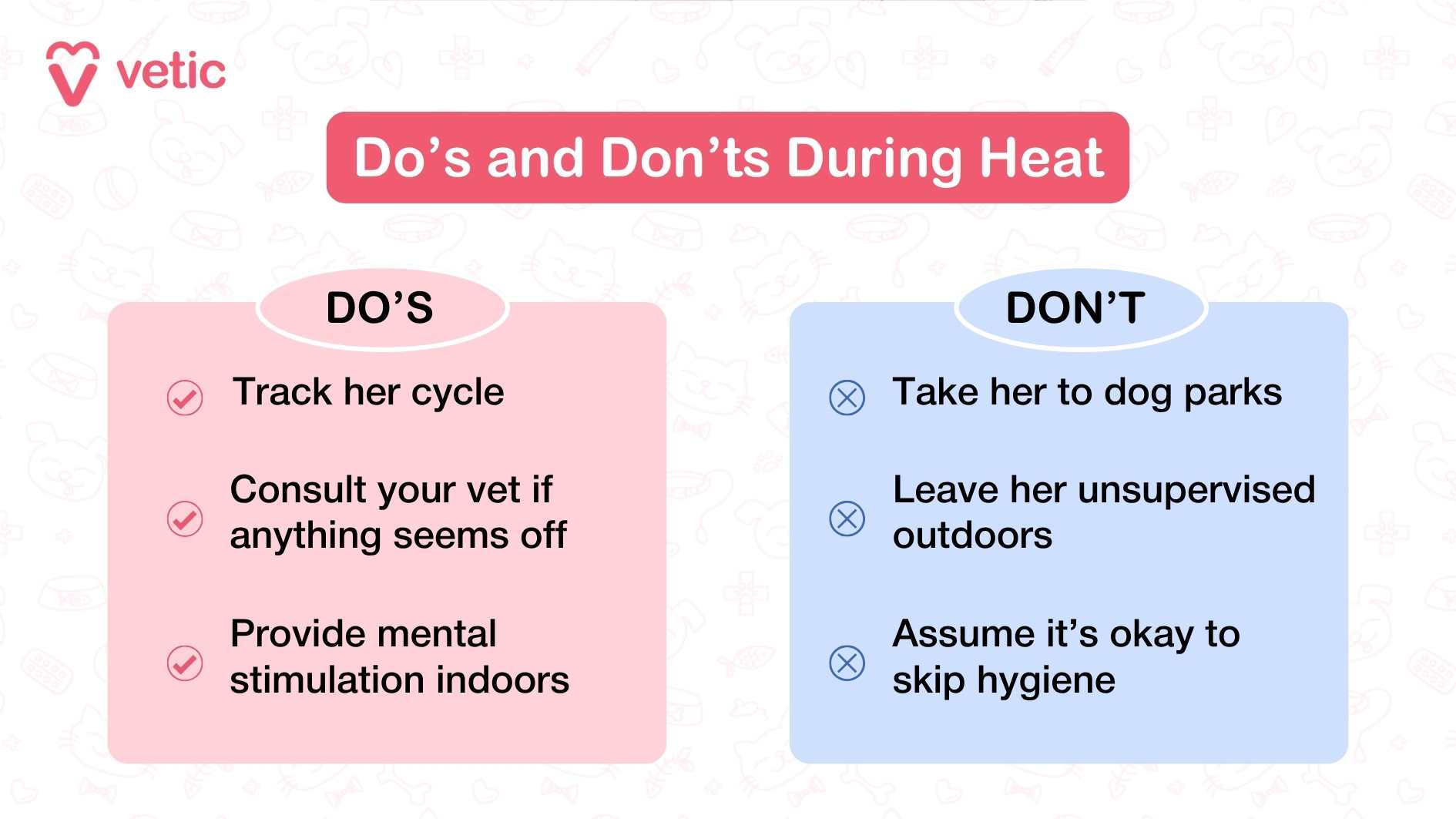
Yes, but be cautious. Keep her leashed at all times and avoid areas frequented by off-leash dogs. She may attract unwanted attention and could accidentally mate if not carefully supervised.
Can I Bathe My Dog During Her Heat?
Yes. A warm bath can soothe discomfort and maintain hygiene. Use mild dog-specific shampoo and ensure she is thoroughly dried. Avoid over-bathing as it may irritate the skin.
Concluding Words on Dog Heat Cycle
Understanding your dog’s heat cycle is crucial for her well-being and your peace of mind. From managing hygiene to avoiding accidental pregnancies, being prepared makes a big difference.
Consult your vet to determine the best age and time to spay your dog based on her breed and health status. Refer to reliable resources like AVMA, WSAVA, and BSAVA for expert-backed advice—and when in doubt, remember: always rely on your veterinarian.
Can a Dog in Heat Be More Susceptible to Infections?
During heat, the cervix is more open, which can make the uterus more vulnerable. If you notice unusual-smelling discharge, fever, lethargy, or excessive drinking after a heat cycle, contact your vet promptly. These can be signs of a uterine infection that requires attention.
How Do I Track My Dog’s Heat Cycle?
Keeping a simple record works well. Note the start date, how long bleeding lasts, and any behavioural changes you notice. Most dogs cycle every six months. If your dog’s cycles are shorter than four months apart or longer than twelve months apart, it is worth mentioning to your vet as this can occasionally indicate a hormonal issue.
Why Is My Dog in Heat but Acting Normal?
Some dogs show very mild or no obvious behavioural signs during heat, particularly those in early proestrus, on their first cycle, or older and well-trained. This does not mean heat is not occurring. Always check for physical signs such as swelling and discharge even if behaviour seems unchanged. If you are unsure whether your dog is in heat, your vet can confirm with an examination.
Dog Heat Cycle by Breed Size (Small / Medium / Large)
Small breeds such as Chihuahua, Pomeranian, and Shih Tzu typically experience their first heat at 4 to 6 months. Medium breeds like Beagle and Labrador usually cycle at 6 to 9 months. Large and giant breeds including German Shepherd and Great Dane may not have their first heat until 10 to 18 months. Larger breeds often have irregular first one or two cycles, which is normal.